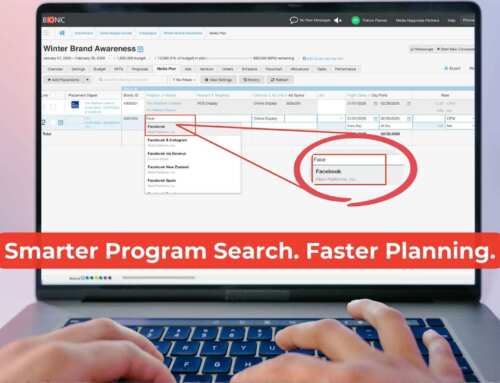

Bionic Advertising Systems today unveiled a new feature in its Media Planning System that helps media planners by reporting on a media program’s history of usage within the agency.
Why is Collaboration Important in Media Planning?
Collaboration is important in media planning because it involves many people with diverse perspectives, expertise, and goals. If you’re involved in media planning, you should know that working together with your team can help you to create a comprehensive and effective media plan.
Here are some reasons why collaboration is so vital in media planning:
- Better understanding of the target audience: Collaborating with your team will enable you to pool your knowledge and insights about the target audience. This approach will help you to create a more detailed and accurate profile of the audience. By working together, you may also uncover valuable information about the audience that could be missed if you work independently.
- Improved media selection: Working collaboratively with your team will allow you to identify the most effective media channels for your campaign. By combining your knowledge and expertise, you can select media channels that are most likely to reach your target audience and achieve your campaign’s objectives.
- Increased creativity: Collaboration encourages team members to brainstorm and share ideas, which can lead to innovative and creative media strategies. By working together, you can develop fresh and unique approaches to media planning that may not have been considered otherwise.
- Better communication and coordination: Collaborating with your team will ensure that everyone is on the same page and working towards the same goals. Sharing information and communicating effectively will help you avoid misunderstandings and ensure that everyone is working towards a common objective.
- Improved efficiency: Working collaboratively can help to streamline the media planning process by reducing redundancies and avoiding errors. By collaborating, you can identify areas of overlap and optimize your workflows to save time and resources.
Media Planning in Excel
According to a 2013 Digiday State of the Industry survey, 76% of agencies are still using 80’s spreadsheet technology to build their media plans.
One problem with media planning in Excel (or a typewriter for that matter), is that the hours of research, media planning and negotiation that goes into the media plan is lost. The media plan’s knowledge is not captured in such a way that the data is readily available to others at the agency.
For those agencies, their media plans might as well be a piece of paper in a file storage box, as its information is not indexed and easily accessible.
While the record may exist, the memory of media plans, campaigns, publisher deals and client preferences lives only with the media planner and is lost when she leaves the organization.
Media Planning in Bionic
In contrast, with Bionic’s Digital Media Planner, nothing is ever lost.
Your media plans are automatically stored and indexed in your agency’s cloud-based storage system.
By using Bionic, you add to a consolidated organizational memory and reap the benefits of a data-driven system to make the entire planning function more efficient. The new program history feature, combined with private advertising deals (which displays all your agency’s custom placements and special rates), further empowers you with smart planning tools that take advantage of your organization’s combined experience.
And isn’t that what being on the same team should mean?
Want to Try Bionic’s Media Planning Tool?
To try Bionic’s media planning software, request a trial of Bionic for Agencies.